A Blog by Adam Christman

  • An Oral History of the Church

    [iframe style=”border:none” src=”http://html5-player.libsyn.com/embed/episode/id/4263658/height/100/width/480/thumbnail/yes/render-playlist/no/theme/custom/custom-color/699010″ height=”100″ width=”480″ scrolling=”no” allowfullscreen webkitallowfullscreen mozallowfullscreen oallowfullscreen msallowfullscreen]

    In order to achieve a kind of symmetry with the announcement of the campus sale on April 1, 2014, our first official episode of the #GGBTSrelocation launches on April 1, 2016. This time, we interview Dr. Jeff Iorg, current president of Golden Gate Baptist Theological Seminary about the campus relocation.

    Check out this episode!

  • Episode_0.mp3

    [iframe style=”border:none” src=”http://html5-player.libsyn.com/embed/episode/id/4227002/height/100/width/480/thumbnail/yes/render-playlist/no/theme/custom/custom-color/699010″ height=”100″ width=”480″ scrolling=”no” allowfullscreen webkitallowfullscreen mozallowfullscreen oallowfullscreen msallowfullscreen]

    An introduction to the podcast and to the first project.

    Check out this episode!

  • Podcast Coming Soon – Prepare with Episode 0!

    Oral History of the Church - St Pauls Cathedral London.jpgThe first episodes of An Oral History of the Church are coming soon – April is just around the corner. Get caught up on our first project by listening to episode 0! https://drive.google.com/open?id=0B3Zet4fY44hGN2NONmFKemNRdUE

  • A Visual Primer Bibliography on Church Discipline

    A Visual Primer Bibliography on Church Discipline

    The following is a list, in no particular order, of 12 helpful books that discuss church discipline or elements of it. This list is for layperson and minister alike, with some focusing primarily on the theoretical/biblical study of the issue, while others focus primarily on the practical, and some include a helpful dose of both.

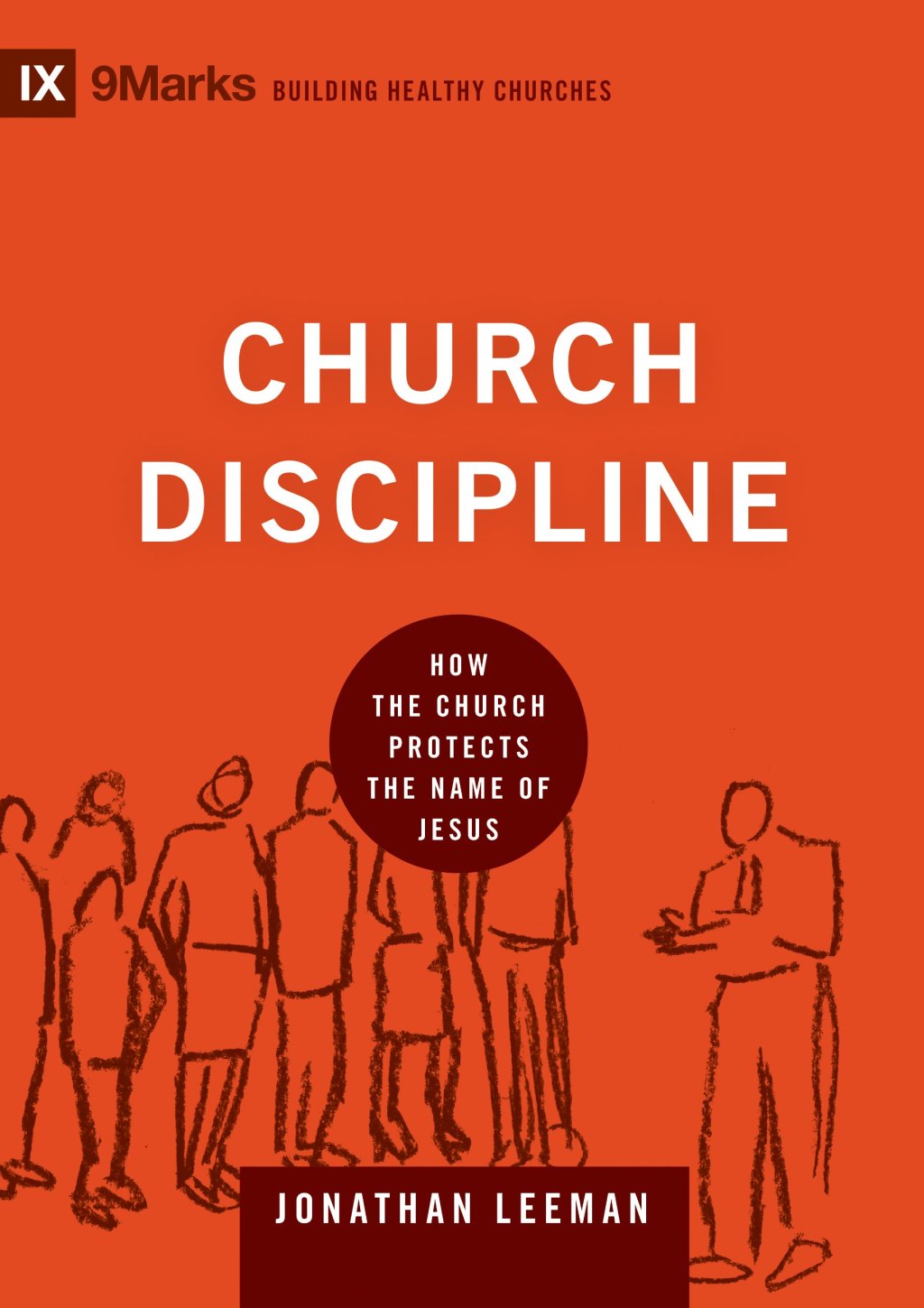
    If you can only read one of these books, read Ken Sande’s “The Peacemaker.” If you can read two of them, add Jonathan Leeman’s “Church Discipline” (it’s very short; it’s more of a handbook). If you can read more than that, but don’t know where to go next, hit me up in the comments and we can talk about which one might be best for you and your needs.

    Several of these are available in Spanish, as well.

  • Christian Games Done Right: That Dragon, Cancer

    Good review here on ‘That Dragon, Cancer,’ the game I routinely return to in my own thoughts. I’m still processing it.

    Nelson's avatarVideo Games and the Bible

    'Drowning' Image from That Dragon Cancer Official Site A screenshot of That Dragon, Cancer

    *Sources of screenshots are listed in their respective file names.

    __________________________________________

    That Dragon, Cancer* (TDC) gameplay footage and discussion from the Video Games and the Bible YouTube channel:

    That Dragon, Cancer was created by predominantly Christian-staffed independent studio Numinous Games. Among these developers are the Green family, whose story and struggles are captured by the game.

    ——————

    That Dragon, Cancer is the heartwrenching true story of the Green family’s now-deceased infant son, Joel, and his five year battle with cancer. TDC‘s unusual subject matter, combined with a use of gorgeous, surreal vignettes to tell its tale, attracted attention from sources both Christian and secular.

    I don’t want to talk about that.

    Instead, I want to tackle how I feel this title has been tragically misrepresented by the games media. And as a result, those who might have benefited most from…

    View original post 522 more words

  • New Podcast Begins in 3 Weeks!

    That’s, um.

    That’s pretty much it.

    But if you’re interested in those precious DEETS (details, ya know…don’t you love it when jokes are explained?)…

    Jonathan McCormick and I have begun work on a podcast called “An Oral History of the Church.” Overall, the podcast will be a conversational walk through various events, movements, and persons in the history of the Christian church. We are taking a topical approach on our subject matter. In addition, we’ll be releasing the podcast as seasons (which we’ll call ‘volumes’ because we can – THIS IS AMERICA!), and each volume will release episodes on a weekly basis.

    The first volume is a project where we present an oral history of the campus relocation of our alma mater, Golden Gate Baptist Theological Seminary. They are moving their main campus from Mill Valley, CA to a new site and building in Ontario, CA in June of this year. We have interviews recorded and scheduled to be recorded with past and present students, faculty, staff, and administration, as well as neighboring church members and pastors.

    For more information on the focus of this project, what an oral history even *is* in the first place, our methodology, who we are, and what we hope to experience in this project, please take a listen to our preface to the project, episode 0. Our current distribution platform is YouTube, but we plan to also put it out through traditional podcasting platforms in the future. Please subscribe and share with your friends. We’re collecting some pretty interesting conversations with some pretty interesting people as we get a look at what this relocation looks like here on the ground at GGBTS.

  • Game Review: That Dragon, Cancer

    It has been a very long time since I reviewed a game on here, and I can’t think of a better way than to do it with this one.

    On December 12th of 2014, video game developer, husband, and father Ryan Green – along with his wife and co-developers – raised over $100,000 to pay for the development of their game That Dragon, Cancer.* Nine months earlier, the Greens lost their 5-year-old son, Joel, to brain cancer. The game was initially intended as an experience of their struggles and triumph over the cancer. It ended up “a journey of hope in the shadow of death.”

    The word “game” does not adequately communicate to you exactly what That Dragon, Cancer is. This is a game that illustrates the power and potential of video games as a medium for (inter)active experiences that cannot come through any other art form. Joel’s cries in the middle of the night as you try to comfort him, the prayers of the Greens and their friends, and the moments of joy interrupted by piercing grief are only three means by which That Dragon, Cancer takes you by the hand and leads you through the Greens’ experiences. No book, movie, song, or painting can involve you like this “video game” does.

    The abstract art style matches the dream-like quality of the environments and some of the gameplay. In the gameplay, the characters are all faceless. True, some have glasses, and Ryan Green has a beard, but that’s it. The style is minimal, and I think it was a perfect choice for what they made. You can see your own child, or your own loved one struggling with cancer, in Joel’s face. You can see your own face in the avatars of Joel’s parents as they wrestle with what they think about God, faith, hope, and love in their conversations, voicemails, and diary entries.

    Ryan and Amy Green are Christians, and so they faced Joel’s battle with cancer with a worldview that accounts for the potential of God’s intervention in time and space. They took care of Joel as best they could, but also prayed for his healing. In the midst of all this struggle over Joel’s life, we are also let in on their personal struggles with faith, hope, and love. Thanks to the Kickstarter they ran, you can find messages and artwork from many Kickstarter backers in the game, as well. These are messages of hope and loss, grief and joy from many others who have loved ones who are either currently battling cancer or who have lost those loved ones. All these stories you encounter are raw. Including so many of them gives this game scope that it would have lacked without them. You get to see Joel’s battle with cancer as a part of the larger fight against cancer in the lives of many, many people. Too many. So your own story of cancer is also placed in its context among all these others.

    When you experience cancer – either in yourself or in a loved one – how do you tell people about that? How do you tell the community you’ve arranged around yourself, “Hey, this is what’s going on right next to you. This is what’s happening to me”? How do you tell them, “My 1-year-old son Joel was diagnosed with cancer and died at age 5?” How do you tell them, “My father, a teetotaler, died at 31 years old of liver cancer when I was 3 weeks old?” You share the facts. The dates. You try to communicate what the impact is like. And how do you memorialize that person? We pay for a nice gravestone. We write a short obituary. We weep again, alone, so nobody has to see it yet another time.

    I don’t know how to recommend this to you. It is excellent in achieving the goal the Greens set out to accomplish. But is it a game to fill hours with blasting newbs or hopping around goofy worlds with the Super Mario Bros.? No. It’s a game where that dragon, cancer, roars down your throat, full of menace. And for a brief moment, through the experience of the Greens, you roar back.

    *That Dragon, Cancer is available on Steam, OUYA, and through their website thatdragoncancer.com.

  • Book Review: We Cannot Be Silent by R. Albert Mohler, Jr.

    Due to release on October 27th, Al Mohler’s We Cannot Be Silent is a helpful introduction for modern evangelical thought on the current events involving the redefinition of sexuality, marriage, etc.

    At 180 pages in length, it is a suitably brief introduction that should lead hungry thinkers towards yet more reading on various sides of the issues addressed in its pages. It includes nine essay chapters and one Q & A chapter at the end.

    The first chapter introduces the issues to be addressed, as already mentioned above. The second chapter, however, is where Mohler’s book begins to be especially helpful. It takes a hard look at the history of redefining sex and marriage with an examination of general (i.e., culture-wide) failures on the part of Christians to continuously promote a healthy view of marriage. This is most clearly seen in the “progress” of divorce laws and contraception. Again, this chapter is a history, so Mohler points to the trail of thought leading from the expansion of divorce to contraception to abortion. It is not always a direct line, but it is connected, nevertheless. Chapters three and four continue in historical work, looking at the history of the homosexual movement. Of particular interest is Mohler’s highlighting of a book by Marshall Kirk and Hunter Madsen titled After the Ball: How America Will Conquer Its Fear & Hatred of Gays in the 90s (published 1989). This monograph was written by a psychologist and an advertising specialist to “propose a massive media campaign designed to correct stereotypes and neutralize anti-gay prejudice” (quote from the book’s synopsis on Amazon.com). Among the book’s many suggestions, its most callous is probably this one, “As cynical as it may seem, AIDS gives us a chance, however brief, to establish ourselves as a victimized minority legitimately deserving of America’s special protection and care.”[1] This is not to say that homosexual individuals have not been victims of violence or other crimes; and the author doesn’t do that in this book. Rather, it is to point out a stark example of an actual plan put together and then followed that produced the change in which we now live. For years, comedians and others in the media have laughed at the idea of a “gay agenda,” ridiculing the idea as absurdist right-wing paranoia. This point is not to say that all homosexual individuals, their allies, and others are “in on it.” Your average homosexual man or woman is simply trying to live his or her life. Instead, Mohler highlights it in his book, and I bring it up now, to help raise awareness that there actually was and is what one might call a “gay agenda.” It was put together by a psychologist and an expert in advertising who knew how to sell it effectively. Mohler points out not only that this plan was essentially followed to the letter, but that it would (and did) eventually succeed. Chapter four does continue the historical section of the book, but it deals more specifically with the history of marriage as a topic within the homosexual movement and the feminist movement with a parallel look at evangelicals at that time in the 20th century, who began responding to the homosexual movement based on the philosophy of Natural Law.

    The fifth chapter brings the reader into the present day. He discusses the state of the transgender side of the sexual revolution, introducing issues he more fully addresses later in chapter 8, as well as a history of and suggestions for Christian responses to the transgender revolution. Chapter six continues a discussion of present day issues with “The End of Marriage.” He points frequently to the marginalization and eclipse of marriage in the modern age. Marriage, to Mohler and really to many, many others, is “the most central institution of human civilization and human flourishing.”[2] He asserts, “Modernity erases kinship structures, redefines community, establishes the individual as the most important unit of meaning, and sets loose a massive set of social changes that tend to pull the family apart rather than to hold it together.”[3] Some might want to object and say, “But, Adam, hasn’t postmodernity taken over?” I would say that 2015 is currently still centered in modernist thinking. Postmodernity is, if anything, on the way out. Postcolonialism is really the burgeoning philosophical movement of the current generation. Postmodernity has been found wanting by millennials for its emptiness. In postcolonialism, millennials have found a place for morality in an anti-institutional age. Coming back to Mohler’s book, his concern about “The End of Marriage” is that the valuation of having sex without children and children without sex has moved marriage from a covenant to merely a contract, that this could very well lead us to social disaster, and that it has led our society to the subversion of marriage.

    As much as I appreciated the historical overview of the earlier chapters, it is the final four that constitute the meat of the book (and will attract the most attention from reviewers and readers). Chapter seven is a clean look at what the Bible has to say about sex. What I mean by that is there are no frills to this chapter. He examines the biblical texts relevant to the topic, as well as the observations of those texts by those inside and those outside the sexual revolution. The eighth chapter will probably draw significant attention from many acquaintances of mine, as it deals with the intersection of the sexual revolution and religious liberty. It is an important chapter, and one that I think would benefit any reader who want to think about this subject. It concludes with a long quote from Jonathan Rauch, an advocate of gay marriage, that I think is worth your time. The ninth chapter is the final essay of the book, titled “The Compassion of Truth: The Church and the Challenge of the Sexual Revolution.” This chapter could be called Mohler’s systematic theology of sexuality, but it is also more than that. It is a call for truth-telling, illuminated especially by a reflection on Romans 7.

    “‘It [the law] killed me,’ Paul testified (Rom. 7:11), and yet he insisted that the law is good precisely because it informed him of his need for repentance and faith in the Lord Jesus Christ.”[4]

    In addition, he calls out various failures of the Christian church as it has dealt with the sexual revolution. He devotes only one page to decrying moralism, for example, but that page is dense with meaning. He also shows the failure of considering Christians morally superior, the carelessness with which the church has spoken to and treated homosexuals and others, the isolation of Christians from gays, lesbians, and transgendered person (and along with it the withholding of the gospel), and shallow youth discipleship in the churches of the last century. He calls us to do better; to love our neighbors in sharing life and the gospel with them, no matter what the sin involved is.

    The final chapter is a list of Q & A items commonly discussed today. For example, he addresses, “Aren’t Christians being selective with Old Testament law when they appeal to it with respect to homosexuality, while ignoring Old Testament commands about clothing, food, etc.?” and “What is a theologically faithful definition of sexual orientation? Does sexual orientation affect one’s sexual identity?” and “Should the government play any role in legislating marriage?” Mohler has already taken flack for his answer to the question, “Should a Christian attend a same-sex wedding ceremony?” I think his answers are helpful. And while his answers are necessarily brief for the aim of his book, a few of them are, perhaps, overly brief, even to the detriment of the reader.

    Overall, I recommend We Cannot Be Silent as a helpful introduction for anyone interested in Christian thought on the subject of the sexual revolution. It delivers important history, biblical analysis, and thoughtful suggestions for how to proceed in light of all that has happened. If you pick it up, I suggest you follow his endnotes to the books and articles he cites throughout. He references thinkers and historians on both sides of the issue, and those works will also prove helpful.

    [1] Marshall Kirck and Hunter Madsen, After the Ball: How America Will Conquer Its Fear & Hatred of Gays in the 90s (New York: Doubleday, 1989), xxvii.

    [2] R. Albert Mohler, Jr., We Cannot Be Silent: Speaking truth to a culture redefining sex, marriage, & the very meaning of right & wrong (Nashville: Nelson Books, 2015), 85.

    [3] Ibid., 86.

    [4] Ibid., 141.
  • Book Review: An Intepretive Lexicon of NT Greek

    Beale, G. K., Daniel J. Brendsel, and William A. Ross. An Interpretive Lexicon of New Testament Greek: Analysis of Prepositions, Adverbs, Particles, Relative Pronouns, and Conjunctions (Grand Rapids, 2014), 96 pp.

    Many Koine Greek lexicons and grammars have been written over the years. Walter Bauer, et al, produced a thorough and landmark lexicon, which was updated to the third edition fifteen years ago. In 1988, Nida and Louw also produced a lexicon, though theirs was not so much a thorough compilation of options as it was an exploration of each word’s semantic range. A good number of other lexicons and grammars have taken unique angles at the study of Koine. In a recent softcover lexicon, three Greek scholars give the world a helpful aid for some of the smallest pieces of the language.

    This Interpretive Lexicon by Beale, Brendsel, and Ross succeeds as an aid for discerning logical relationships between propositions for the purpose of better exegesis.[1] The subtitle unsubtly lists the subjects of this lexicon. Prepositions, adverbs, particles, relative pronouns, and conjunctions are organized and examined through the authors’ lens.

    On page 18, the authors assert, “[i]t is only an attempt to categorize the relationships ordinarily represented by a given word when such a word appears in the text.” At only 96 pages, the Interpretive Lexicon is hardly exhaustive, but that is just the point. This book is a lexical aid for those who study Koine Greek. It is keyed to both the 2nd and 3rd editions of BAGD/BDAG, Dan Wallace’s grammar, and Murray J. Harris’ Prepositions and Theology in the Greek New Testament. Beale and his fellows have both interpreted and built upon these other works in order to present a synthesized aid for studying some of the trickiest pieces of Koine. While the authors relied on these other texts for much of their content, Beale and his team interpreted their findings and synthesized them in one book. Beale, et al, even suggest that the reader regularly refer to BAGD/BDAG, for example, in order to fully understanding a word’s options.[2]

    One of the highlights of the Interpretive Lexicon is its utility. It makes a clear distinction between references to the 1979 BAGD edition separately from the 2000 BDAG edition of the same lexicon. It also makes clear references to terms and ideas from Wallace’s and Harris’ works. Without these, the Interpretive Lexicon would be far less useful.

    But the Interpretive Lexicon’s most significant contribution is its system of grammatical labels. The Introduction provides their table of labels, breaking down categories of labels, subcategories, and so on. The specific labels also have parenthetical page number references to chapter 8 of yet another monograph on Koine Greek, Semantic Structure by Beekman, Callow, and Kopesec. In addition, Thomas R. Schreiner’s Interpreting the Pauline Epistles is frequently reference in support of their category labels and description choices in the footnotes. The convergence of so much excellent thinking on Koine Greek has produced a relatively concise, helpful table from which Beale, et al, draws their labels for the various uses of the examined prepositions, etc.

    Here is the first entry from the table, located under the “Coordinate Relationships” section. It is an item labeled “Alternative,” abbreviated as “Alt.” It is defined as “The relationship between propositions representing two or more differing possibilities or choices arising from a situation (83).” Finally, the example is given, “E.g., ‘I can watch a movie or I can play golf.’”

    These abbreviated forms of the labels are used throughout the lexicon proper to identify the various use or uses of each entry. In addition, the references to Wallace and Harris make this an excellent starting point when working with a passage that uses any of the terms included in this lexicon.

    By way of comparison, it reminds me somewhat of Bruce Metzger’s Lexical Aids for Students of New Testament Greek. What Metzger did for relating Greek words to their roots and suffixes and so on, Beale, et al, do for words and particles that relate one proposition to another. Perhaps the Interpretive Lexicon’s closest analogue is Douglas S. Huffman’s 2012 Handy Guide to New Testament Greek: Grammar, Syntax, and Diagramming. Huffman’s book is a 106-page attempt at introducing the reader to every kind of item encountered in Koine Greek, and it is a fine introduction to the language. The Interpretive Lexicon, by contrast, has a narrower focus, and so is free to delve deeper into its subject matter.

    In all, An Interpretive Lexicon of New Testament Greek is an excellent softcover lexical aid for students of Koine Greek. I would probably use this with students who have already completed their introductory Greek course(s) as a supplement to Wallace as my main textbook.

    Link to Amazon.

    Link to Half.com. (The cheapest option at the writing of this review at $8.01.)

    Link to Barnes & Noble.

    [1] p. 6.

    [2] p. 20, for one example.

  • What Some Conscientiously-Dissenting Christians Think About the SCOTUS Ruling and Why

    This morning the Supreme Court handed down their decision ruling on the nationwide legality of same-sex marriage. Quite a few of my friends and acquaintances celebrate this, and quite a few of my friends and acquaintances do not. In my reading today, I have come across a variety of responses within those two streams. There are some Christians who are angry, even vitriolic, over the decision. On the other hand, there are LGBTQ folks and their supporters who do not understand why anyone might be a conscientious dissenter to the legalization of same-sex marriage.

    What you will find below is a curated list of articles and a video that demonstrate what I consider good responses from biblical thinkers. I provide short introductions on who each person is and the subject they discuss in their article or video. I will update this list in the days and weeks ahead as more helpful articles, letters, or videos come up. I prepared this for Christians wondering what a good response is to the news and for non-Christians who might want to understand what we think and why.

    “Why the church should neither cave nor panic about the decision on gay marriage” – opinion piece by Russell Moore, president of the Ethics & Religious Liberty Commission of the Southern Baptist Convention via The Washington Post.

    Moore explains the significance of the Supreme Court’s decision for future cultural debate, legislation, and so on, but he also explains the insignificance of the decision on core matters for Christian life and faith.

    A supporting video, “Reaction to the Supreme Court Decision on Same-Sex Marriage,” was released today by Moore through the ERLC YouTube channel. It ends on an important note, that Christians and churches are not to respond with yelling and anger, but rather with the love of Jesus. Borrowing from his Washington Post piece, we must speak with the “accent” of Jesus. We must speak the truth in love, and we must speak love with truth.

    So-Called Same-Sex Marriage” – article by John Piper, theologian, preacher, and retired pastor from the Baptist General Conference.

    Piper gives a short-hand account of the biblical view on humanity, God, sin, and salvation. He explains that Christians do not support same-sex marriage because it is a push to institutionalize a sin. Sin kills the soul, and so we need a Savior from that sin and its consequences. In my reading of his books and listening to his sermons over the years, I can tell you I believe John Piper’s concern for those who are not saved.

    Mohler responds to Supreme Court’s same-sex marriage decision” – article by R. Albert Mohler, Jr., president of the Southern Baptist Theological Seminary.

    Mohler’s article covers much of the same ground as Moore’s, though it has several distinctive features. I would highlight for you what I believe is Mohler’s wise assessment of what this means for the future of religious liberty, even the near future of religious liberty. Again, I agree with what Moore asserted in the Washington Post, that Christians should not panic, but I believe these two writers agree that today’s Supreme Court decision has implications for Christians, Christian-owned businesses, churches, and Christian schools that will be argued and decided in public discourse and eventually in the court system.

    Here is a supporting article to many of the points Mohler makes about the potential future of America based on looking at the ten years of legalized same-sex marriage in Canada, “Same-Sex Marriage Ten Years On: Lessons from Canada” by Bradley Miller. I don’t know anything about Miller, but the history he recounts is very interesting and eye-opening.

    Black Christian Leaders Respond to SCOTUS Ruling on Same-Sex Unions” by Jemar Tisby, writer, and president & co-founder of the Reformed African American Network.

    Tisby collected statements from several black Christian leaders on the SCOTUS ruling. Maybe the most interesting to me is the last one from Phillip Holmes, co-founder of RAAN, on love.

    Don Carson Responds to the SCOTUS Ruling on (So-Called) Same-Sex Marriage.” This is from the “Ask Pastor John” podcast, hosted by Tony Reinke. It usually features John Piper, but this special episode is an interview with Don Carson, writer, preacher, and always a gentleman scholar. Run time is ~18.5 minutes, available streaming or as a download at this link or through the “Ask Pastor John” podcast.

    In the early part of the interview, Carson covers pretty much the same topics as I have done here. The latter part of the interview is a discussion of potential problems for Christians from the SCOTUS ruling. I agree with Carson on this, that the most realistic threat (or, at least, the nearest) is to para-church organizations and Christian schools (especially those less tied to particular denominations or outright non-denominational).

    Christians React to the Legalization of Same-Sex Marriage: 9 Key Findings” by Barna Group.
    Barna Group is a well-known research group, having conducted thorough surveys for years. On July 1st, they released this data on how American Christians have reacted to the SCOTUS decision. Most of this data isn’t too surprising. What DID surprise me is the significant percentage of Christians under the age of 40 finding so much in common with Christians over 40. I thought we were more fractured than that.

    *        *        *

    When I read these articles, I did not sense anger or hatred. These are people expressing their worldviews calmly and considerately. So on that count, please reconsider whether “bigot” is actually a helpful term at any level of discussion with those who are disappointed by the SCOTUS decision. Recent statistics say that around 70% of Americans claim Christianity as their religion, and many of those are conscientious dissenters, like myself. Religions are defined by their traditions. (Oh, and are all traditions bad? Let’s remember that the baggage associated with this word thanks to the Protestant Reformation and recent decades is not the only way to understand that term.) Many religions base their traditions on their holy writings. This is the way in Christianity. The Bible shows that sin spiritually kills humanity by separating us from God. It is, in God’s eyes, a rebellion against the King of creation. Jesus died, was buried, and came to life again to pay our penalty for that sin. This is how Christians think of the world at large. The Bible defines many sins. One of those is homosexual behavior. Christians dissent from this SCOTUS decision because it is an institutionalization of sin, putting it on a pedestal. Why would we celebrate something that kills? Our entire worldview is based on the idea that sin kills and we need Jesus to save us from it. Christians struggle with sin every day, losing many battles, but winning a few, as well, by the grace of God. We seek salvation from our sin, we seek to be changed from our previous sinful habits and mindsets into the habits and mindsets that characterize Jesus Christ, and we seek to bring those who are willing with us away from sin and into life.

    This is historical, biblical Christian thinking.

    So to the angry Christian yelling quotes from Leviticus today, I say calm down. Look in the Gospels and see how Jesus spoke to people. How many times was he angry and shouting? Those moments are rare. How did Paul and Peter respond to the courts of their day? Paul especially suffered specific and physical persecution. How many times is he angry and shouting in the book of Acts? I would argue that number as zero.

    To the non-Christian who might want to understand what we believe and why we dissent from the SCOTUS ruling, this is what I have to offer. If you want to engage in a kind discussion on the issue, I will happily speak with you in kindness and sincerity. If not, I hope that at least my brief thoughts and the items I listed above help you understand me and people like me to a better degree.