Category: Interpreting the Bible

  • A Visual Primer Bibliography on Church Discipline

    A Visual Primer Bibliography on Church Discipline

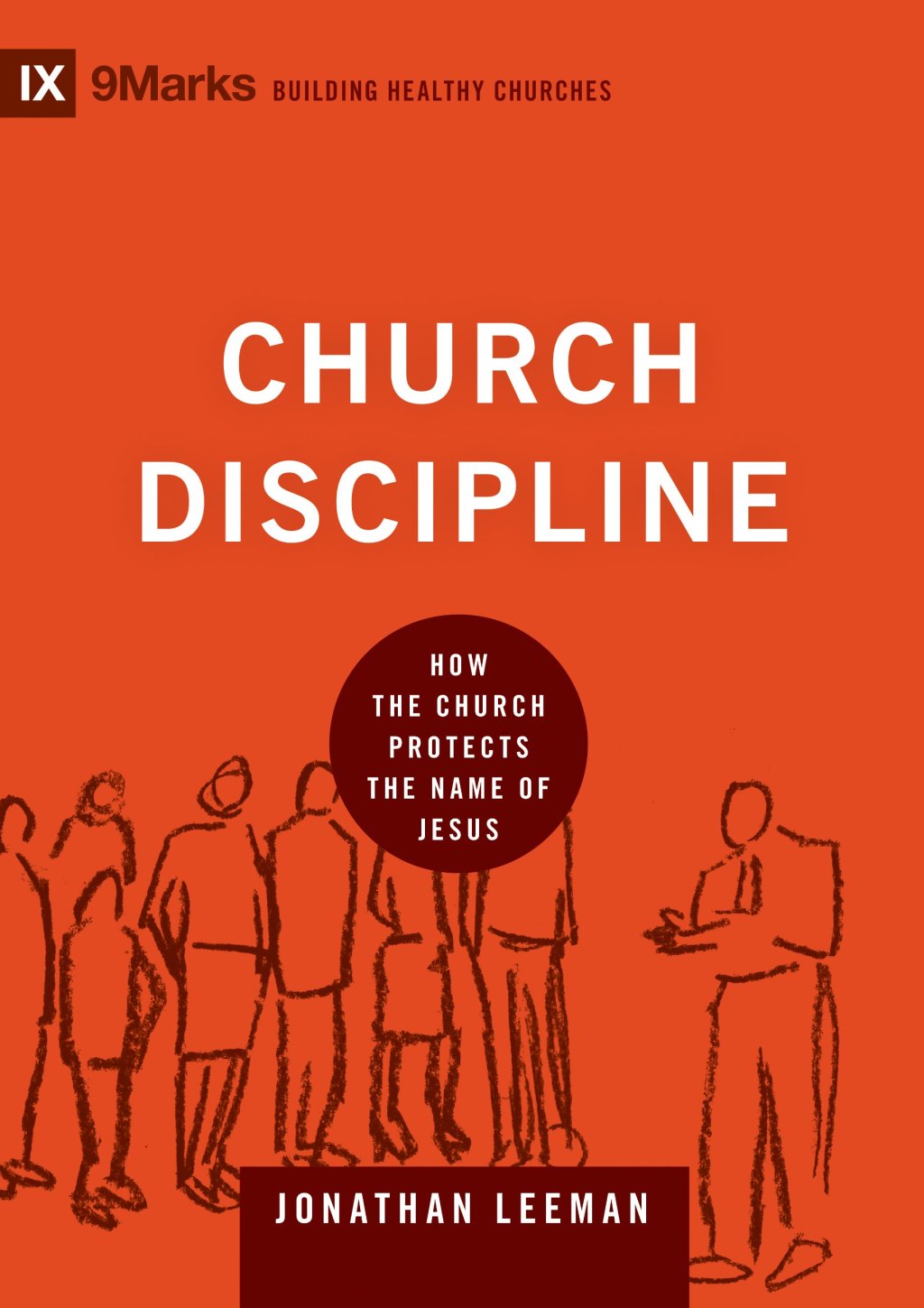
    The following is a list, in no particular order, of 12 helpful books that discuss church discipline or elements of it. This list is for layperson and minister alike, with some focusing primarily on the theoretical/biblical study of the issue, while others focus primarily on the practical, and some include a helpful dose of both.

    If you can only read one of these books, read Ken Sande’s “The Peacemaker.” If you can read two of them, add Jonathan Leeman’s “Church Discipline” (it’s very short; it’s more of a handbook). If you can read more than that, but don’t know where to go next, hit me up in the comments and we can talk about which one might be best for you and your needs.

    Several of these are available in Spanish, as well.

  • A Brief Thought on Inerrancy in the Classroom

    “Inerrancy” is a belief about the Christian Scriptures that many embrace, some question, and some outright reject. If you are a Bible teacher, surely all you need do is educate your learners on what the Bible is and says, right? There is a temptation to simplistic Bible teaching that models not only a low view of the Scriptures, but may also enable lazy reading in the teacher and the learners. David Dockery tells us, “[we] want to affirm that theology is foundational for the development of mature, thoughtful followers of Christ.”[1] By holding firm to the doctrine of inerrancy, the educator’s Bible teaching is appropriate and enhanced.

    Inerrancy Defined

                Several attempts at a definition of inerrancy have been put forward in various monographs, conferences, and theologies. The usual standard for understanding inerrancy is the Chicago Statement on Biblical Inerrancy. It has “A Short Statement” in the beginning, which is quoted here as a definition for the term.

    1. God, who is Himself Truth and speaks truth only, has inspired Holy Scripture in order thereby to reveal Himself to lost mankind through Jesus Christ as Creator and Lord, Redeemer and Judge. Holy Scripture is God’s witness to Himself.

    2. Holy Scripture, being God’s own Word, written by men prepared and superintended by His Spirit, is of infallible divine authority in all matters upon which it touches: it is to be believed, as God’s instruction, in all that it affirms, obeyed, as God’s command, in all that it requires; embraced, as God’s pledge, in all that it promises.

    3. The Holy Spirit, Scripture’s divine Author, both authenticates it to us by His inward witness and opens our minds to understand its meaning.

    4. Being wholly and verbally God-given, Scripture is without error or fault in all its teaching, no less in what it states about God’s acts in creation, about the events of world history, and about its own literary origins under God, than in its witness to God’s saving grace in individual lives.

    5. The authority of Scripture is inescapably impaired if this total divine inerrancy is in any way limited or disregarded, or made relative to a view of truth contrary to the Bible’s own; and such lapses bring serious loss to both the individual and the Church.[2]

    An Objection to Inerrancy and Its Solution

                There are some who object to use a term about Scripture which does not originate in Scripture. It is true that the word “inerrant” does not appear in the Bible. However, the Bible speaks of itself in particular ways, as do a number of biblical figures, that treat it as what we call inerrant. For example, read any of the Gospels and you will see Jesus correct the Sadducees and the Pharisees because they did not know the Scriptures. His correction usually takes the form of quotes from or allusions to Old Testament texts. John tells us, “Scripture cannot be broken” (Jn. 10:35, ESV). In addition, we already use many terms not in Scripture to describe God, for example. “Omnipotent” is not found in the Bible; yet, it accurately describes the God revealed in the Scriptures.

    Implications for the Classroom

                Strong theological convictions about core issues are necessary when teaching the Bible. They create a depth in the teacher and engender a hunger for study in the learner. A passionate teacher will always have a greater impact on his or her learners than an ambivalent one. An inerrantist’s dedication to read the Bible for what it says and to treat it as the authority we believe it to be creates precisely this infectious passion. But, does such a commitment stifle learning? Dockery puts it best in his book.

    Do these theological commitments stifle honest intellectual exploration? We do not think so. Our challenge is to preserve faithfully and pass on the Christian tradition while encouraging honest intellectual inquiry. We believe these two things can co-exist, even if in tension, in an enriching dialectical dependence.[3]


    [1] David S. Dockery, “Introduction – Faith and Learning: Foundational Commitments,” Faith and Learning: A Handbook for Christian Higher Education, David S. Dockery, ed. (Nashville: B&H Academic, 2012), 13.

    [2] The Chicago Statement on Biblical Inerrancy (http://www.reformed.org/documents/index.html?mainframe=http://www.reformed.org/documents/icbi.html, accessed 4/25/2014). See also Rick and Shera Melick, “Teaching that Transforms” (Nashville: B&H Academic, 2010), 20-30; Craig L. Blomberg, Can We Still Believe the Bible?, Grand Rapids: Brazos Press, 2014.

    [3] Dockery, 12.
  • Interpreting the Bible: Part 1

    Regular readers of the Bible come to a question like this over and over: “What does that mean?” It’s a great question! It demonstrates humility, an interest in learning, and the desire to read the text as the author intended.

    This post is the first in a series on interpreting the Bible. Over the course of the series, I will discuss a number of different ‘tools’ or principles to keep in mind as you read the Bible. Some principles are more important than others, but they are all helpful.

    Today, I begin with a beginning – the foundational ideas surrounding meaning in the text. Is there a meaning to be found, or do I make it up as I go? The easy method is not necessarily the best one. The easy method is just to find whatever meaning you want in the text that you’re reading. Thus, you create the meaning regardless of the author and, really, regardless of whatever text you’re looking at. I have known people who used such an extreme example of this method that I didn’t believe them, at first. For example, I was told about a particular question this particular young man wanted answered by God, who said that he had prayed a long time for an answer and couldn’t figure it out. His solution was to pick up his Bible, close his eyes, and flip the pages from front to back and picking a random spot to place his finger. He then read starting at whatever verse it was until he came across a verse that could potentially be read as an answer to his question.

    !!!

    I hope, dear theoretical reader, that I don’t need to tell you what a bad method that is. Do you read e-mails like that? You’re wondering what your boss wants out of this project, so you close your eyes and randomly pick a sentence? Of course not. Do you randomly pick an item on your grocery list and shop only for that and whatever comes after it? You’ll miss everything that comes before! Or what about a love note from your wife or husband? Do you read that letter in whatever order you want, rather than top to bottom? Do you pick only one sentence, enjoy it, and put that letter away for tomorrow?

    Why would we read the Bible like that?

    When you receive a communication from someone, you try to discern their meaning in that e-mail, list, instruction, etc. The Bible should be treated no differently. “Aha!” you might say. “But how do can we know the meaning of long-dead authors located in two continents??” This is exactly the reason I begin this series on interpreting the Bible – I believe we can know their meaning, or, at least, make very good guesses.

    Although there are a number of good books out there about understanding the Bible, I am going to borrow the model published by J. Scott Duvall and J. Daniel Hays, professors at Ouchita Baptist University, in their book “Grasping God’s Word.” The model is a visual one, but I don’t own the copyright to their book, so I’ll convey the ideas with words! The Bible is information/communication from Their Town – that is, the “town” of the author(s) and the original biblical audience. We want to bring it to Our Town, to apply it in our contemporary contexts. The problem is that there is a River of Differences that separates each town, and it is filled with issues like the language(s) barrier, myriad cultural differences, the difference in time, ethnicity, geography, socio-economic status, genre understanding, and more. So we can’t just bring it straight from Their Town to Our Town. What we can do is build and cross the Principlizing Bridge, where – after understanding the text in Their Town – we carry the timeless principles from Their Town and apply them in Our Town.

    The first step in interpreting the Bible is to know what you are reading. Are you looking at one of the Gospels? An Old Testament prophetic book? An epistle? A history? An apocalypse?  If you are unsure what kind of book you are reading, start with the following chart.

    (Side note: just because you find the overall genre of the book you’re in does not mean you’re done! Sub-genre is a topic I’ll discuss in another post.)

    The genre of your text has a thorough influence on the text, creating and sometimes excluding options of meaning by virtue of its literary form. The genre used in the Bible you can see in the chart above, but a simpler list is thus: Gospel, Letter, History, Apocalypse, Narrative, Law, Poetry, Prophetic, and Wisdom. As the blog series goes on, I will discuss each genre in individual posts. Next time, however, is a discussion of the nitty-gritty of reading. Yes, dear theoretical reader, we will look at understanding sentences, paragraphs, and discourses! Guess what? Those things really are worth talking about!

    That’s it for this post, but I leave you with a question. What is your favorite biblical genre to read? Personally, I love the straight-forward reading in the letters of the New Testament, but Gospel and Narrative are tied for a close second.